

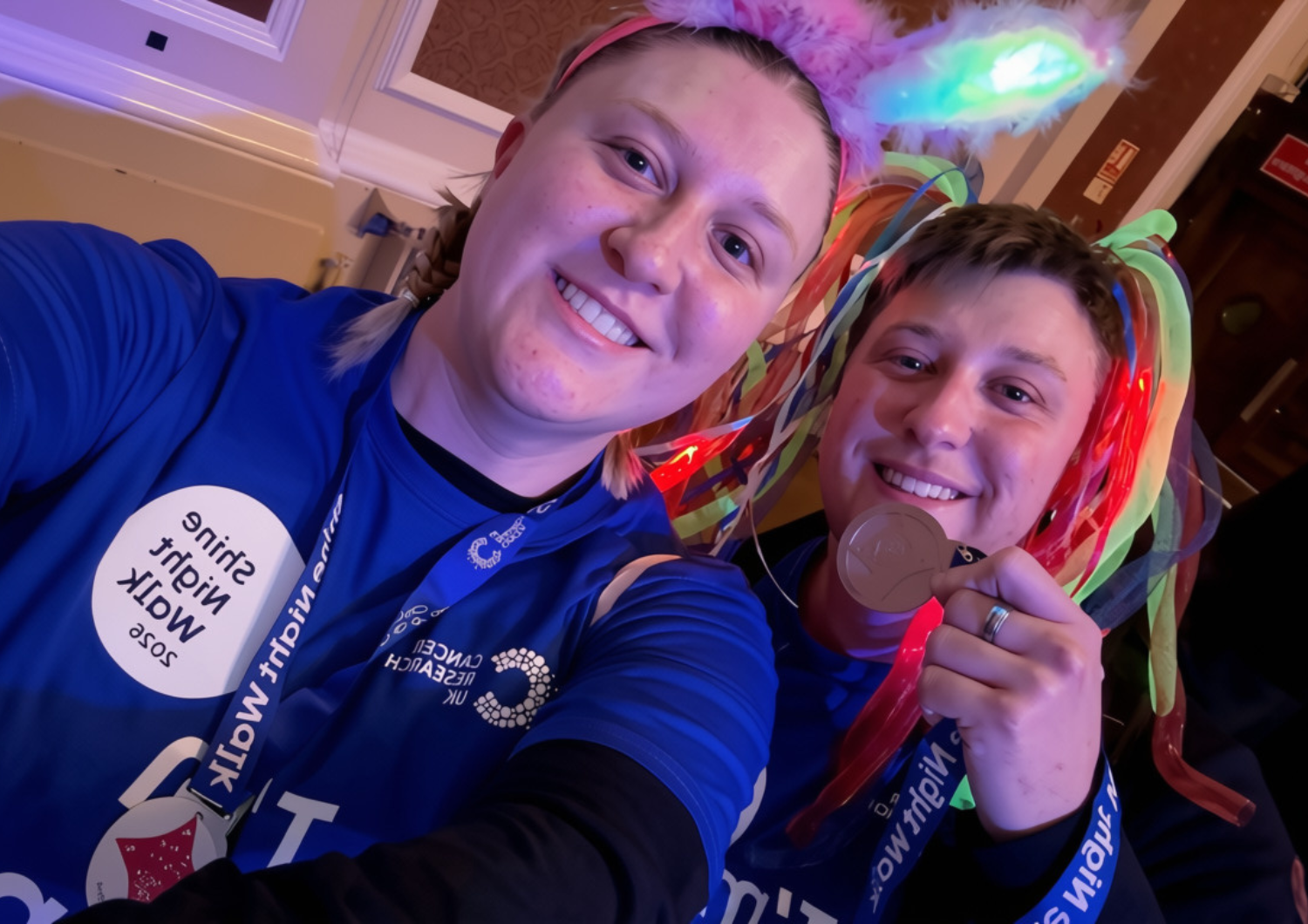
A mental health nurse has raised £260 for a cancer charity in memory of their father.
Sophie Phillips works in Ardleigh ward at The Lakes mental health unit in Colchester, a service run by Essex Partnership University NHS Foundation Trust.
Sophie and their twin brother Alex Gorden completed Cancer Research UK’s Shine Night Walk in Cambridge on Saturday 17 October.
Sophie said: “I completed the 10km walk in 2 hours and 1 minute. I have raised £260 for brain cancer research, which I’m really pleased about.”
Alex raised more than £130 for research into ovarian cancer.
Their father Austen sadly died in May 2022 after being diagnosed with a stage 4 glioblastoma tumour in January that year.
Sophie wants to raise money towards finding a cure for people diagnosed with cancer, especially brain cancer.
Statistics from Cancer Research UK show that more than 12,500 people in the UK are diagnosed with brain cancers or tumours every year.
If you would like to sponsor Sophie, visit Sophie’s fundraising page.
About EPUT
- EPUT has a vision to be the leading health and wellbeing service in the provision of mental health and community care: Who we are – Essex Partnership University NHS Foundation Trust
- EPUT provides services to more than 100,000 patients at any one time and our staff are focused on providing high quality care in often complex situations.
- The organisation has invested in inpatient facilities and community services to make them safer and more therapeutic. We have extensively invested in technology to keep patients safer, enhanced training, and are continuously working with our staff, patients, their families and carers to use learning and best practice to enhance our quality of care.
- While there is more to do, the Trust has made significant progress through innovation:
- Our 111 mental health crisis phone line ensures people in need can access support 24 hours a day, 365 days a year
- People with lived experience have been employed in designated roles across the Trust, ensuring patient voice is heart of the organisation and all that we do.
- A number of new initiatives have been launched, helping people access the support they need when they need it most. These include a mental health urgent care department, By Your Side maternal mental health service, Rough Sleeper team, mental health crisis ambulance cars, virtual wards and neuromodulation service.
- EPUT was formed on 1 April 2017 and provides community health, mental health and learning disability services across Essex, Luton and Bedfordshire and Suffolk. We employ more than 7,200 staff working across more than 200 sites.
- To read more about our priorities and commitments to deliver the highest quality and safest care possible, visit https://eput.nhs.uk/about-us/2023-2028-strategic-plan/