

Young people at risk of developing psychosis are discovering the therapeutic benefits of arts and crafts, helping them build confidence, express themselves and connect with others.
Patients supported by Essex Partnership University NHS Foundation Trust’s (EPUT) At Risk Mental State (ARMS) Service in south west Essex are being given opportunities to take part in creative workshops and community activities to support their mental health and wellbeing, funded by EPUT’s charity.
The service supports people aged 14 to 35 across Basildon, Thurrock and Brentwood who may be experiencing unusual thoughts, feelings of paranoia or hearing voices. These experiences can also lead to social isolation and make it difficult to take part in group activities.
Thanks to EPUT’s Charitable Funds, the team is helping patients overcome these barriers by providing opportunities to try new experiences in a supportive environment.
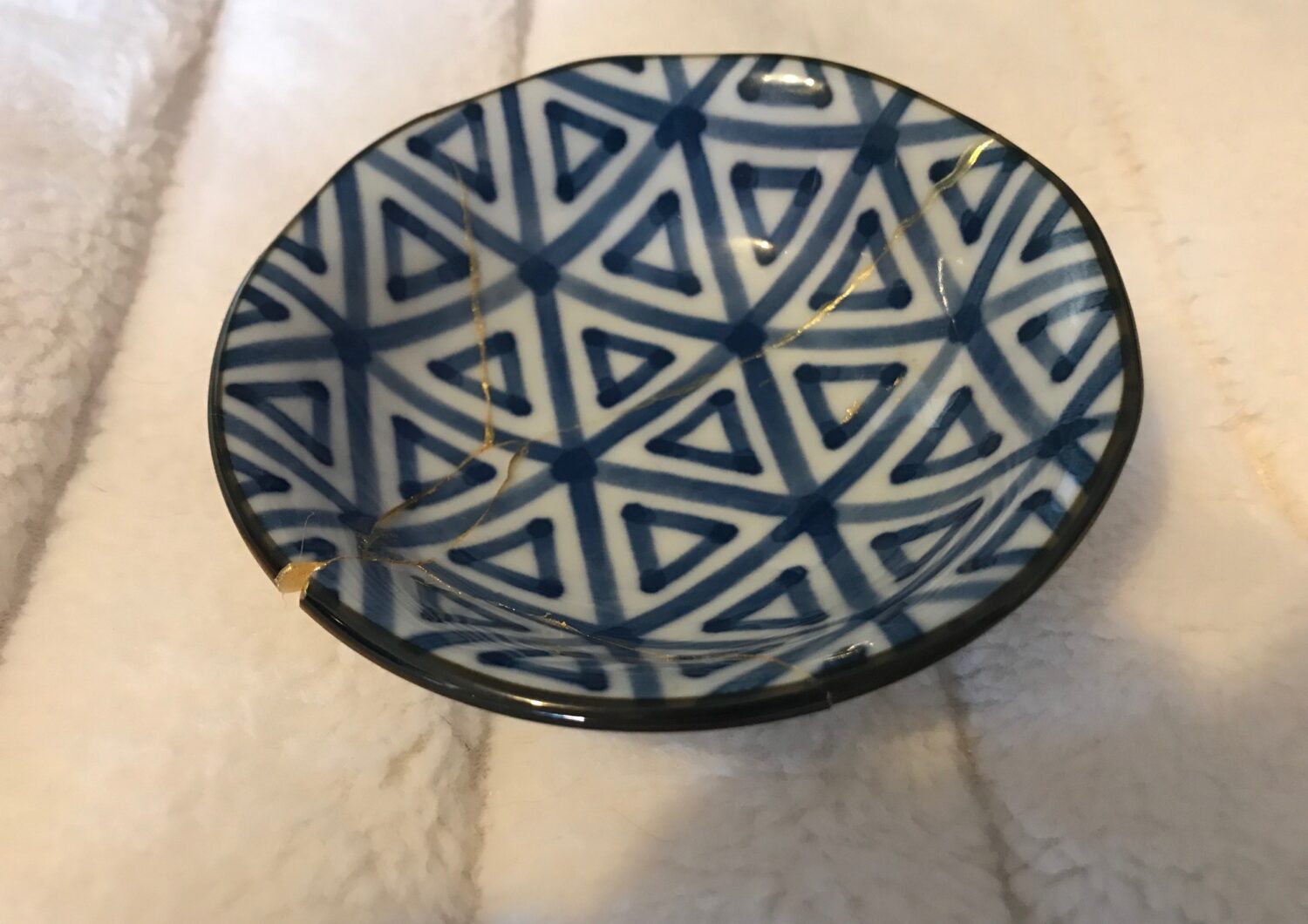
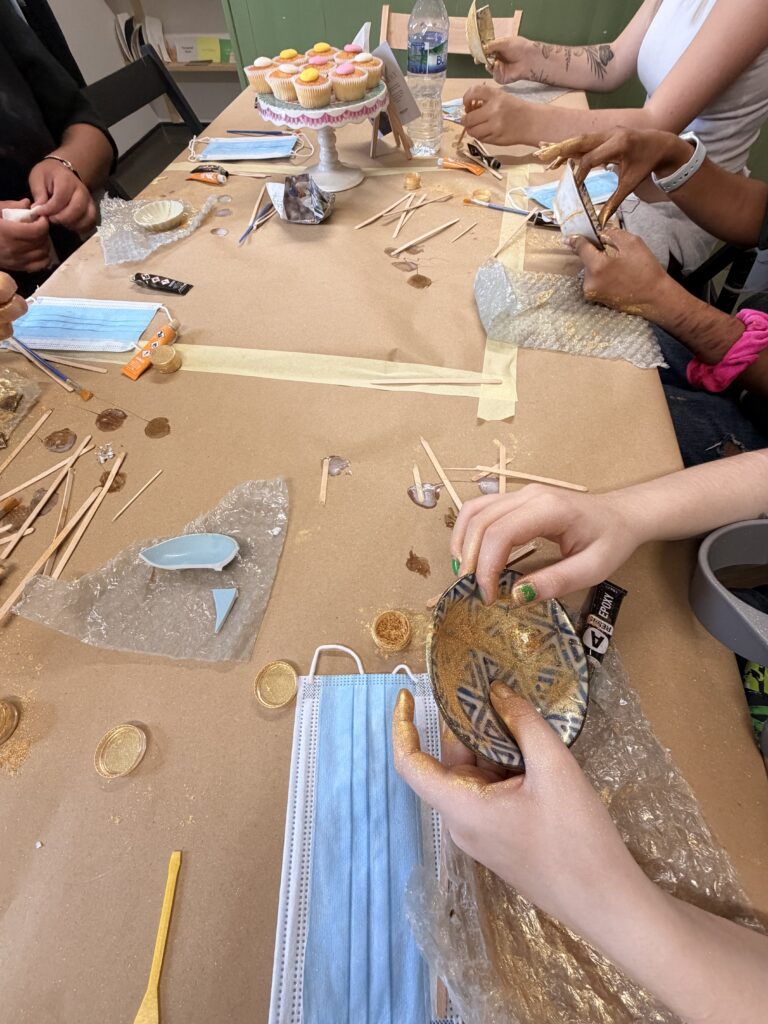
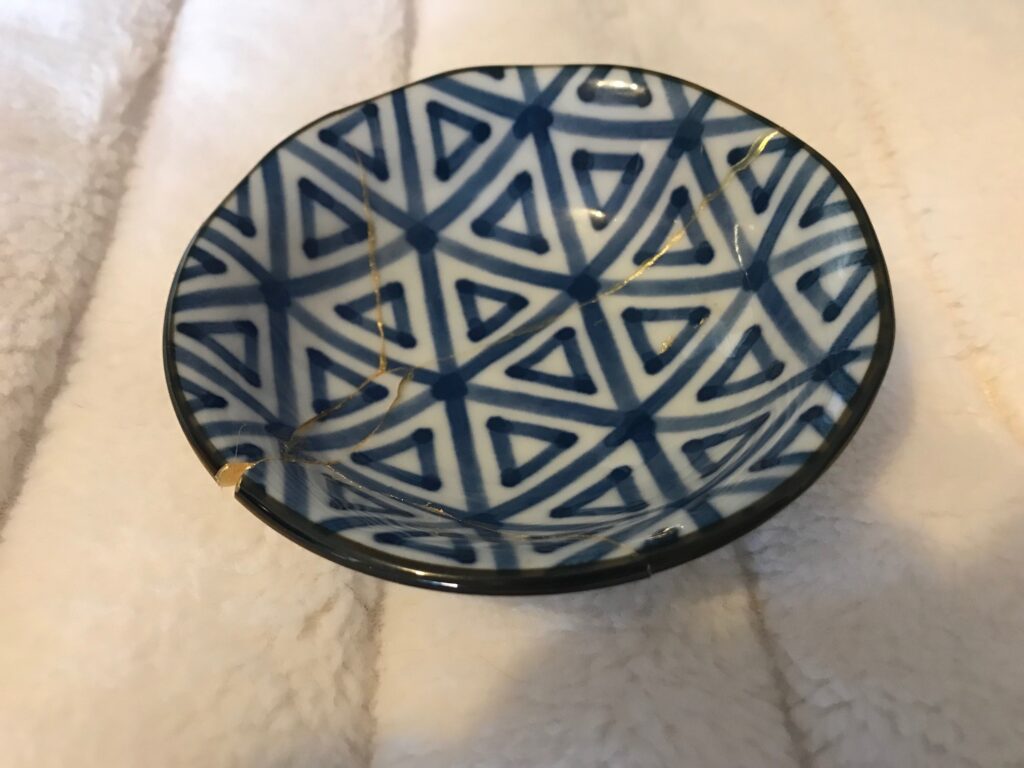
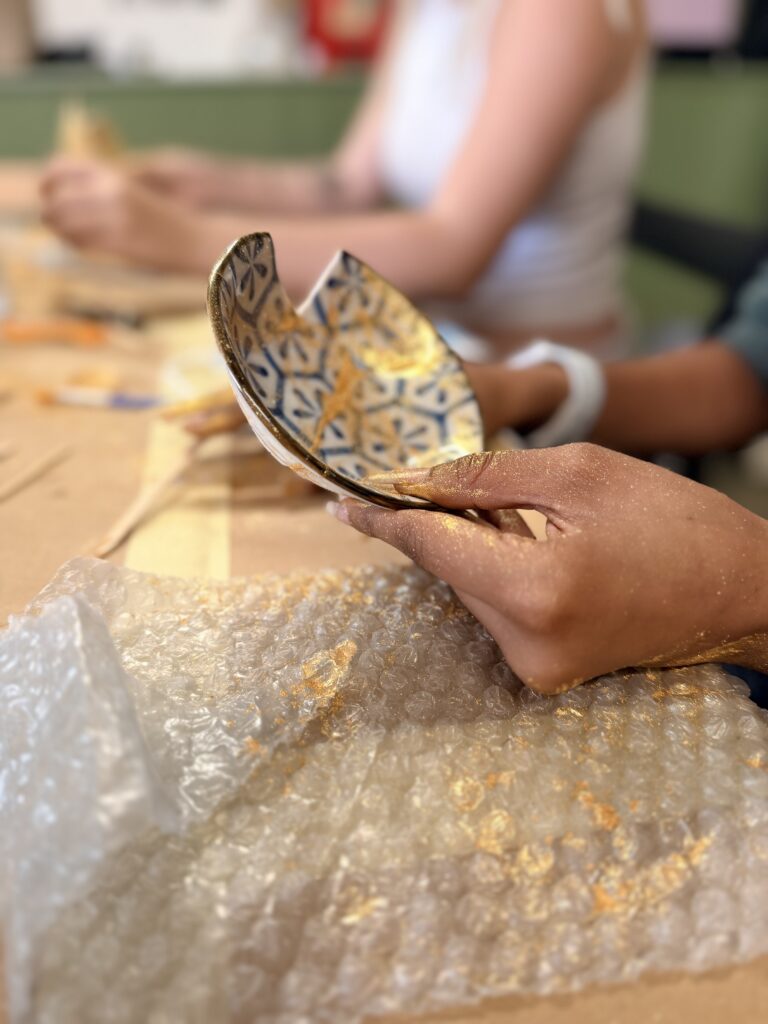
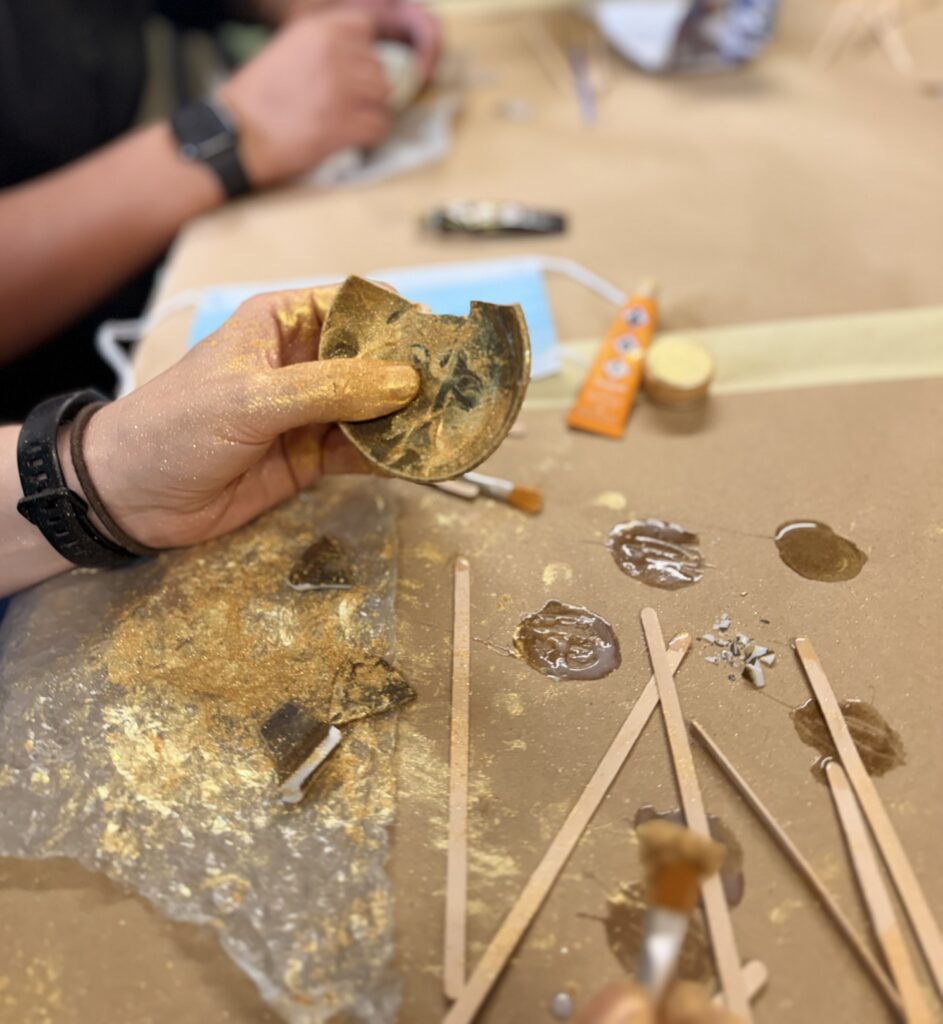
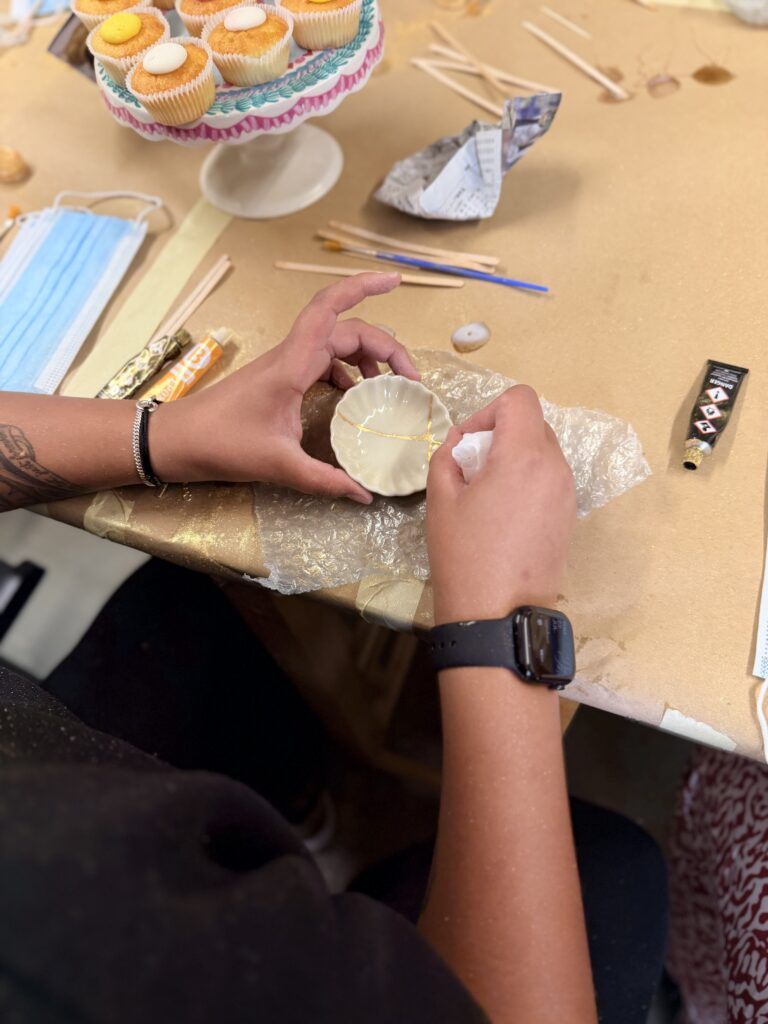
One activity was a Japanese-inspired Kintsugi workshop at Minus Cloud Nine in Brentwood, where patients learned the art of repairing broken pottery using gold-coloured materials.
Kintsugi, meaning ‘golden joinery’, celebrates imperfections rather than hiding them. By highlighting cracks in gold, broken pieces are transformed into something beautiful and unique, carrying a powerful message about self-acceptance and how difficult experiences can become part of our personal story.
Led by psychotherapist Charlotte, the workshop encouraged conversations about mental health and wellbeing while giving participants the chance to learn a new skill and create something they could feel proud of.
Arts and crafts can have important therapeutic benefits for mental health, helping people relax, express emotions and build confidence. Taking part in group activities also creates opportunities to form friendships, reduce isolation and develop a sense of belonging.
For people who may find social situations particularly challenging, simply attending and taking part can be a significant achievement.
Martine Pridgeon, Senior Occupational Therapist at EPUT’s ARMS Service, said: “For some of the people we support, getting out into the community and joining a group activity can feel like a really big step, so seeing them take part and enjoy themselves was lovely.
“The Kintsugi workshop had such a meaningful message behind it. The idea that something broken can become beautiful in a different way is a lovely reminder that our experiences and imperfections are part of what makes us who we are.
“Creative activities give people a chance to express themselves, build confidence and connect with others in a relaxed environment. Even small steps like attending a workshop can make a real difference to someone’s wellbeing.
“One patient said they thought the workshop was really relaxing and that it was nice to focus on something with a clear head, another commented on how nice it was to meet new people, and a patient’s mother said that he had talked about it a lot afterwards and mentioned how much he had enjoyed it.”
The team is now hoping to organise more activities, including a mandala dot-painting workshop, to give more patients opportunities to explore their creativity, meet others and feel more connected to their communities.
The project is supported by EPUT Charitable Funds, which helps fund activities and improvements that go beyond what the NHS would normally provide, making a positive difference to patients’ experiences and wellbeing.
About EPUT:
- EPUT has a vision to be the leading health and wellbeing service in the provision of mental health and community care: Who we are – Essex Partnership University NHS Foundation Trust
- EPUT provides services to more than 100,000 patients at any one time and our staff are focused on providing high quality care in often complex situations.
- The organisation has invested in inpatient facilities and community services to make them safer and more therapeutic. We have extensively invested in technology to keep patients safer, enhanced training, and are continuously working with our staff, patients, their families and carers to use learning and best practice to enhance our quality of care.
- While there is more to do, the Trust has made significant progress through innovation:
- Our 111 mental health crisis phone line ensures people in need can access support 24 hours a day, 365 days a year
- People with lived experience have been employed in designated roles across the Trust, ensuring patient voice is heart of the organisation and all that we do.
- A number of new initiatives have been launched, helping people access the support they need when they need it most. These include a mental health urgent care department, By Your Side maternal mental health service, Rough Sleeper team, mental health crisis ambulance cars, virtual wards and neuromodulation service.
- EPUT was formed on 1 April 2017 and provides community health, mental health and learning disability services across Essex, Luton and Bedfordshire and Suffolk. We employ more than 7,200 staff working across more than 200 sites.
- To read more about our priorities and commitments to deliver the highest quality and safest care possible, visit https://eput.nhs.uk/about-us/2023-2028-strategic-plan/